Digital twin development. Real buildings, clearly understood.
A digital twin is a digital representation of a physical asset or building, linked to operational data. Blackbird develops interactive 3D twins for factories and residential villas, bringing equipment, climate, energy and system status into one spatial view. The two showcases on this page use simulated data, not live sensors.
Blackbird works from Riyadh, Dubai and Beirut. Discuss digital twin development for factories, facilities and smart homes in Saudi Arabia, the UAE and Lebanon with our team.
A digital twin is a digital representation of a physical asset or building, linked to operational data. Blackbird develops interactive 3D twins for factories and residential villas, bringing equipment, climate, energy and system status into one spatial view. The two showcases on this page use simulated data, not live sensors.
How does a digital twin work?
Model the space
We build a 3D model of the site from drawings, scans or survey data, scoped to the floors, rooms, zones and equipment that matter to your decisions.
Connect the data
Readings come from your existing sensors, BMS, IoT platforms or meters through scoped integrations and the permissions your systems allow. Nothing is connected automatically.
Place it in context
Each value is attached to the asset it describes: room temperature, machine condition and electrical demand are distinct measurements, with units, timestamps and missing-data states.
Explore and decide
Teams orbit, filter and click into the model to see status, trends and alerts where they happen, then act through the tools they already use.
Factory and residential villa digital twin showcases
Factory digital twin
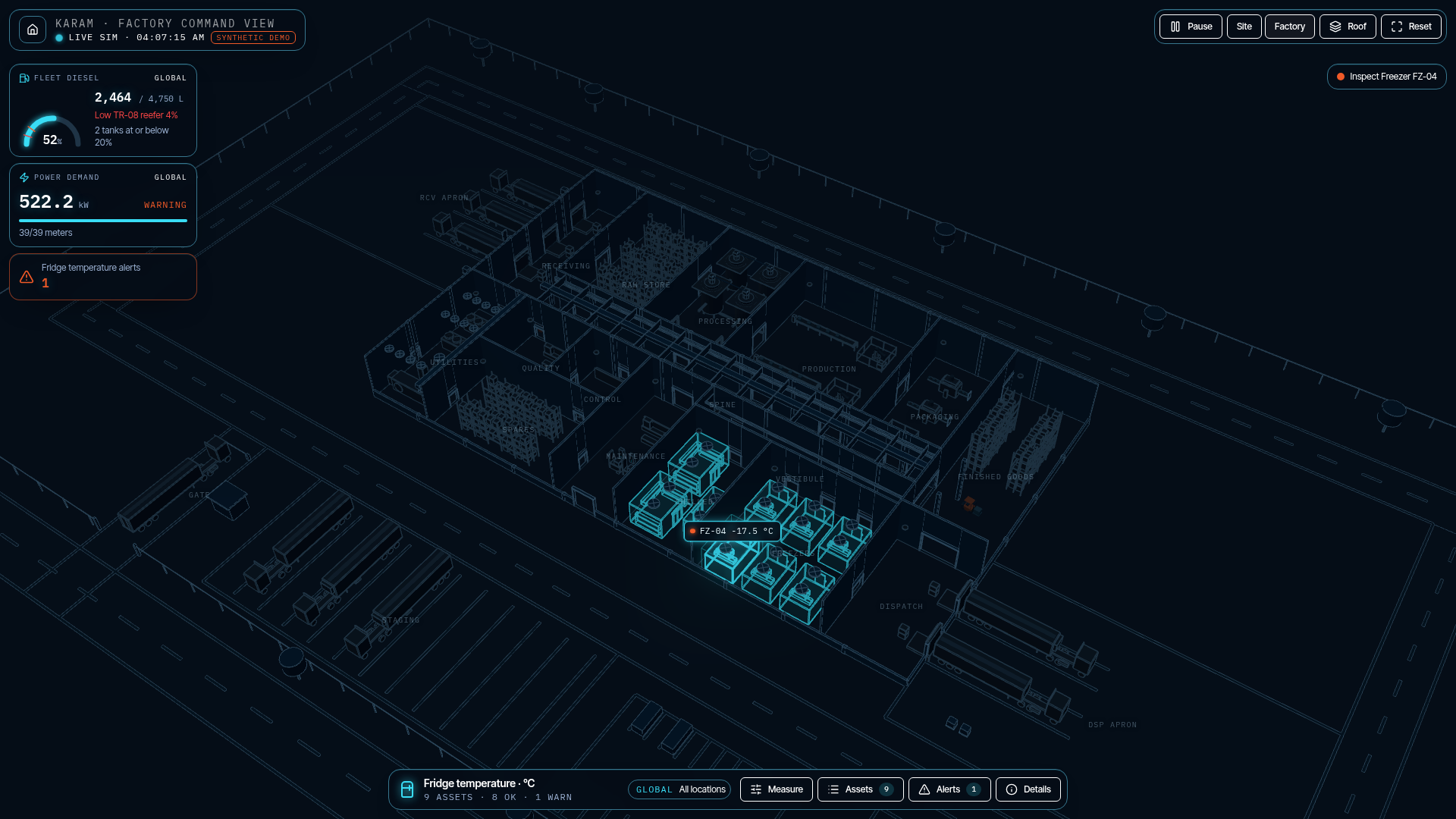
Explore production equipment, cold rooms and the logistics yard in an interactive industrial digital twin. Select a measurement, locate an asset and inspect simulated status, history and alerts.
Equipment and cold storage status in place
HVAC zones and temperature views
Electricity and energy use by area
Historical trends and simulated alerts
Logistics yard and refrigerated trucks
CO2e shown as an illustrative estimate from electricity use
Simulated data. Demonstration hosted by Karam Technology.
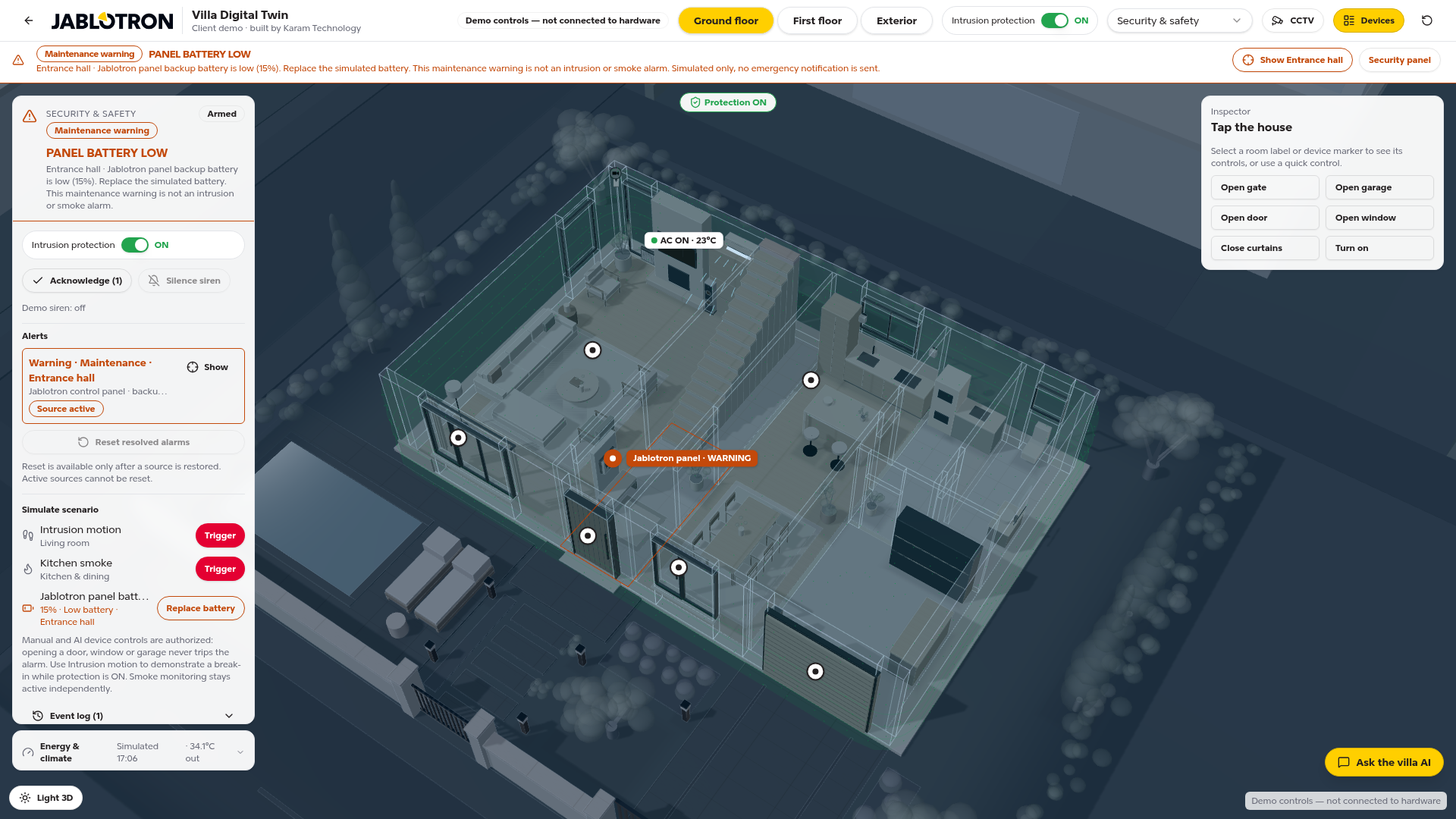
Explore a residential villa across floors and exterior spaces. Inspect rooms and devices, try simulated climate and access controls, and see how security and maintenance events can be explained spatially.
Floor-by-floor and exterior navigation
Room and device exploration
Doors, windows, gate, garage and curtains
Energy and climate per room
Simulated security, smoke and panel maintenance
A villa AI assistant for questions about the home
Simulated data. Demonstration hosted by Karam Technology.
What can a digital twin do for a facility or home?
Find the problem faster
See which room, line or cold store is out of range instead of searching through separate dashboards.
Understand where power goes
Compare consumption by zone or system and spot patterns over time, in the spaces where they occur.
Plan work with context
Locate equipment, review its history and brief technicians with a shared visual reference.
Explain a building simply
Give non-technical stakeholders a clear picture of a property and its systems without reading schematics.
Keep knowledge in one place
Asset positions, system layouts and notes stay attached to the model rather than in scattered files.
Discuss changes visually
Walk through layouts, zones and upgrades together before committing to work on site.
Digital twin vs BIM, BMS and a 3D model
How building technologies differ
Technology
Purpose
Operational data
3D model or virtual tour
Shows the geometry and appearance of a place.
Does not, by itself, track changing equipment or sensor conditions.
BIM (building information modelling)
Organises building geometry and asset information for design, construction and handover.
Can provide a model and asset structure for a twin; live operating data requires integrations.
BMS (building management system)
Monitors and may control building services such as HVAC.
Can be a data source for a twin. A twin does not automatically replace its controls.
Operational digital twin
Links a representation of the building or asset to its operating state.
Combines spatial context with current or historical readings, subject to actual sensor coverage.
What does a real digital twin deployment require?
What the demos are
Both linked experiences are synthetic demonstrations hosted by Karam Technology. Every reading, alert and trend in them is simulated. They are not connected to real sensors or hardware and are not evidence of a commissioned client deployment.
What a real deployment needs
A scoped 3D model, an asset register, integrations with your sensors, BMS or IoT platforms, and access permissions agreed with your facility and IT teams. Refresh rates, sensor coverage, retention and hosting are agreed for each project.
What a twin does not replace
A digital twin is a visualisation and decision layer. It does not replace certified safety systems or emergency notification. Any real hardware control requires separately scoped integration, authorisation and safety review.
Digital twin development: frequently asked questions
What is a digital twin?
A digital twin is a digital representation of a physical asset or building linked to operational data. It helps people understand equipment, conditions and history in context. Blackbird's factory and villa showcases illustrate this with simulated data.
Does Blackbird develop digital twins in Saudi Arabia and the UAE?
Blackbird has offices in Riyadh, Dubai and Beirut and offers digital twin development for factories, facilities and residential villas. Each project starts with a discussion of the site, available data, integration permissions and the operational decisions the twin should support.
Are the factory and villa demos connected to real sensors?
No. Both linked Karam Technology showcases use synthetic readings and simulated controls. They demonstrate interaction patterns, not a live plant, occupied home or commissioned client deployment.
What is the difference between a digital twin, BIM and a BMS?
BIM organises building geometry and asset information. A BMS monitors and may control building services. An operational digital twin can combine a spatial model with data from those systems, without automatically replacing either one.
What do you need to build a digital twin of my site?
Typically drawings, scans or survey data, an asset list, the measurements and workflows you need, and access to approved sensors, meters, BMS or IoT interfaces. Sensor coverage, timestamps, refresh rates, missing readings and access permissions must be scoped before integration.
How much does digital twin development cost?
Blackbird scopes pricing around model complexity, site size, asset count, available drawings, data integrations, history, access roles and any control requirements. There is no fixed price quoted on this page. Share the site and required use cases for a project-specific proposal.
How long does a digital twin project take?
Timing depends on the model, available data and integration approvals. A typical project is scoped through discovery, modelling, integration, validation and handover. Blackbird agrees deliverables and a timeline after reviewing the site rather than promising a universal delivery date.
Is the CO2e figure in the factory demo a measured value?
No. The factory demo shows an illustrative electricity-related CO2e estimate derived from simulated electricity use. It is not a reading from an emissions sensor and does not include diesel or other unmetered sources.
Can a digital twin control doors, HVAC or other hardware?
The showcases simulate controls only. Real hardware control depends on compatible systems, approved interfaces, permissions and safety review, and must be scoped separately. These demos do not send emergency notifications or replace certified security and fire systems.
Further reading and related services
IBM: What is a digital twin? — Background on physical assets, operational data, models and the difference between twins and standalone simulations.